


There was a time when cosmetic procedures in Nigeria were rarely discussed in the open. People had them done, of course, but conversations around fillers, facial contouring and other aesthetic treatments often happened quietly. There was still a great deal of mystery around what practitioners actually did, why patients wanted these procedures and, perhaps most importantly, what was considered safe.
Dr. Beatrice Ige was one of the practitioners who helped bring those conversations into the open. At a time when aesthetic medicine was still relatively new to the Nigerian market, she was unusually visible about her work. She documented procedures on social media, shared before-and-after results and spoke openly about the science, anatomy and planning behind cosmetic treatments. She also became known for a particular facial aesthetic: a more streamlined jaw and pointed chin, alongside the Russian-style lips that became another recognisable part of the era. The look was dramatic, highly visible and, for a period, highly sought after.
But there is an interesting part of the story that is less widely known: Dr. Beatrice stopped performing the facial contouring technique. Not because she suddenly believed aesthetic medicine was wrong, or regretted helping to popularise it. Rather, her thinking about what makes a good aesthetic result had changed.
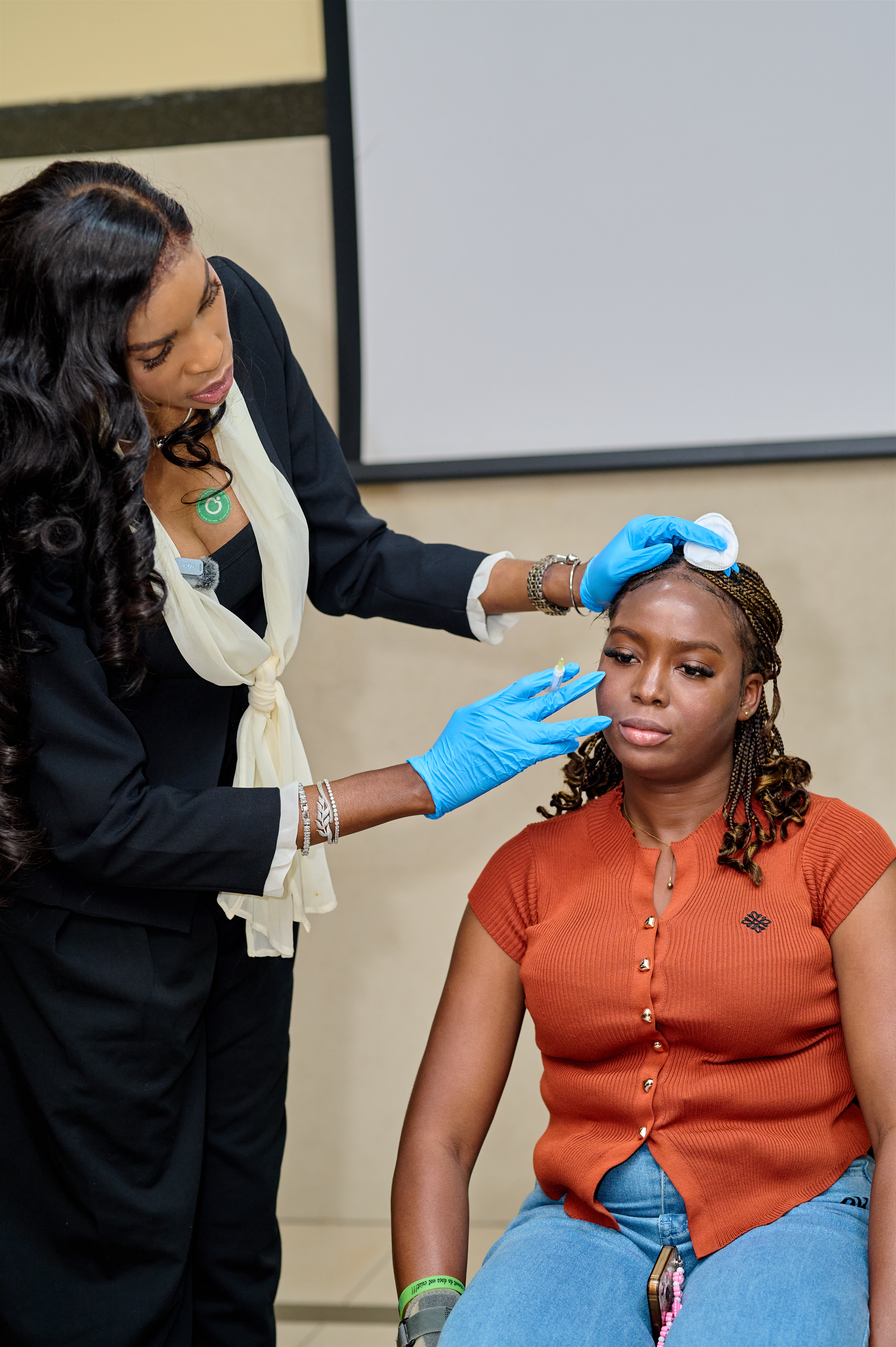
We sat down with Dr. Beatrice to talk about the trend she helped popularise, why she eventually walked away from it, and what her experience has taught her about the responsibility of being influential in an industry where trends can move faster than medicine.
BeautyInLagos: At a time when Aesthetic Medicine was still largely shrouded in secrecy in Nigeria, you were very open about documenting cosmetic procedures online. What made you choose that level of transparency?
Dr. Beatrice: I’ve always believed that medicine should educate before it sells. When I started sharing procedures online, it wasn’t because I wanted to shock people. It was because I wanted to demystify aesthetic medicine.
At the time, there were so many myths. People thought cosmetic procedures were only for celebrities, or that everything was fake, dangerous or excessive. I wanted people to see the science, the anatomy, the planning, the artistry and, most importantly, the safety behind every treatment.
For me, transparency builds trust. If people understand what we’re doing and why we’re doing it, they can make better decisions. That has always been more important to me than simply getting another patient through the door.
BeautyInLagos: Looking back, how do you think that openness changed the way Nigerians viewed cosmetic medicine?
Dr. Beatrice: I think it helped normalise conversations around aesthetics. Patients became more informed and started asking better questions instead of simply asking for “bigger lips” or “sharper jawlines.” Doctors also became more comfortable discussing complications, anatomy and ethical practice openly.
The industry became more visible. Of course, visibility also brought imitation, and not all of it was good. But overall, I believe education moved the profession forward.
BiL: You became widely associated with a particular facial contouring technique. Why do you think it resonated so strongly with patients at the time?
DB: Yes, people definitely associated me with the pointed chin and the Russian Bratz lips. At the time, aesthetics was still very new in Nigeria, and many people were sceptical. Patients wanted to see visible, undeniable transformation before they believed these procedures actually worked.
Those treatments delivered dramatic results, and they helped people understand what aesthetic medicine could achieve. For that period in time, they served a purpose.
I think that’s important context when we look back at trends in aesthetics. It’s easy to judge an old trend through today’s lens, but every period has its own ideas about what beauty should look like. What was considered exciting and transformative at one point can eventually feel excessive or dated as our understanding develops.
“Medicine is about growth, not ego,” – Dr. Beatrice Nwalie
BiL: So when did you begin to question whether the results were working in the long term?
DB: While those transformations could look beautiful initially, they often required significant maintenance, and in some patients, they didn’t age as harmoniously as I wanted. My philosophy shifted from creating dramatic change to preserving beauty over decades.
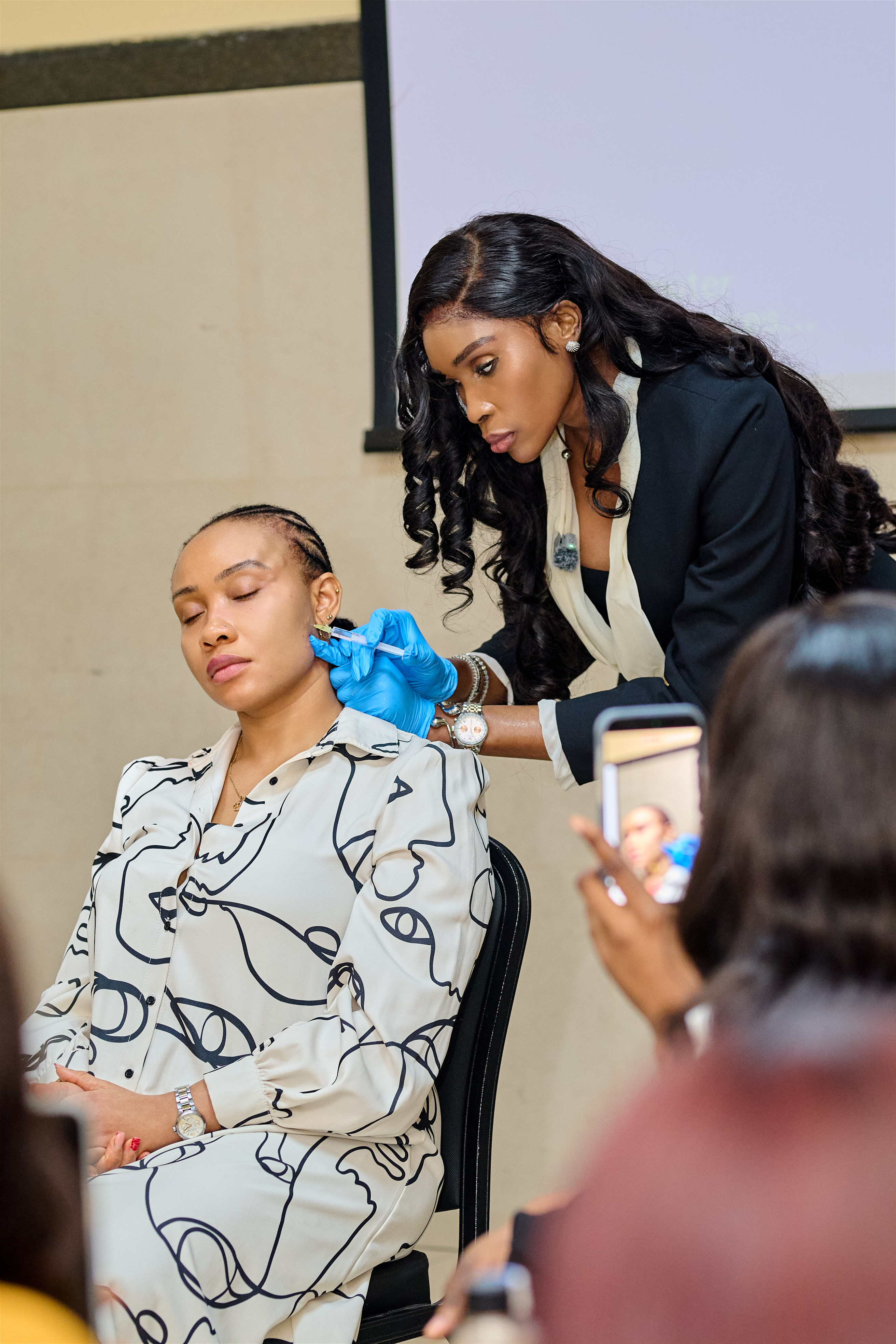
That’s when I made the conscious decision to stop offering those techniques and focus more on facial longevity, skin quality, collagen preservation and treatments that respect the natural anatomy of the face.
I don’t see that change as moving away from my past. I see it as becoming a better doctor. Evolution is part of good medicine, and I’m proud that my practice today reflects not just what looks good now, but what will continue to look good in the years to come.
BiL: Does it bother you that people sometimes still attribute those exaggerated results to you?
DB: It doesn’t bother me because my work speaks for itself. Every industry goes through phases where techniques become copied without understanding the principles behind them. People often remember the trend but forget the evolution.
I’ve never believed aesthetics should create identical faces. If you’ve followed my work over the years, you’ll notice that my philosophy has become increasingly conservative. Today, I’m far more interested in preserving beauty than manufacturing it.
BiL: You said you’ve become more interested in facial longevity than facial transformation. What does that mean in practice?
DB: Today, I ask a very different question: “How will this face look in five, ten or fifteen years?” That changed everything.
There comes a point where you realise that just because you can do something doesn’t mean you should. Sometimes the best treatment is less treatment. Sometimes the best injector is the one who says no.
And trust me, my patients despise my “no’s.”
Patients shouldn’t permanently alter their anatomy because of a social media trend.
Dr. Beatrice IGE
BiL: Do you think social media has too much influence over cosmetic medicine today?
DB: Absolutely. Every few years there’s a new obsession: fox eyes, Russian lips, extreme jawlines, overfilled cheeks, weight-loss medications, and now skin quality and regenerative medicine.
Trends come and go. Faces don’t.
Patients shouldn’t permanently alter their anatomy because of a social media trend. Good aesthetics should outlive trends.
BiL: What responsibility do aesthetic practitioners have when a treatment becomes highly sought after or driven by social media?

DB: A huge responsibility. Our job isn’t to follow trends. Our job is to protect patients. Social media rewards dramatic before-and-after photos. Medicine rewards good long-term outcomes. Those are not always the same thing.
Sometimes saying “no” is the most ethical procedure you’ll perform all day.
BiL: How has your approach to facial aesthetics changed over the years?
DB: Today, I focus on skin quality, facial proportions, collagen stimulation, prevention and graceful ageing. I use less filler than I did years ago.
I combine skincare, energy-based treatments, regenerative medicine, toxins, biostimulators and lifestyle optimisation to create results that are difficult to identify.
The highest compliment I can receive today isn’t, “Who did your face?” It’s, “You look amazing… have you been sleeping better?”
That’s success.
It is also perhaps the clearest illustration of just how far her philosophy has evolved. The goal is no longer to create a recognisable “done” look. It is to make an intervention that supports the person without overtaking them.
And, according to Dr. Beatrice, patients themselves are beginning to want the same thing.
BiL: What are patients asking for now that you think represents a healthier direction for aesthetics?
DB: Patients are becoming much more sophisticated. Instead of asking, “Can you make my lips bigger?” they’re asking, “How do I age well?”
They’re investing in healthy skin, collagen preservation, pigmentation management, regenerative treatments, wellness and longevity.
That shift excites me.
I genuinely believe the future of aesthetics isn’t about changing faces. It’s about helping people remain recognisably themselves for as long as possible.
And that’s exactly where my practice is today.
Beyond the Trend

There is something particularly revealing about speaking to a practitioner who has been part of an industry’s evolution for this long. Trends are easy to see in hindsight. What is harder to appreciate is what they represented at the time, why patients wanted them, and what practitioners learned from delivering them.
Dr. Beatrice’s story is therefore not simply about a pointed chin, Russian-style lips or any other aesthetic that happened to have its moment. It is about what happens when experience changes the definition of a good result.
She helped make aesthetic medicine more visible at a time when many Nigerians were still trying to understand it. She became associated with a look that captured the imagination of patients and was subsequently copied across the industry. And then, rather than continuing to chase the demand she had helped create, she chose to step away from it.
Today, her idea of success is considerably quieter. It is healthier skin. Better proportions. Preserved collagen. Graceful ageing. A patient who still looks like herself.
And perhaps most importantly, a doctor who is willing to say no.
Because in an industry where beauty trends can change with the algorithm, Dr. Beatrice’s most enduring lesson may be that the face is not a trend.
“Good aesthetics should outlive trends.”
Dr. Beatrice IGE
Find Dr. Beatrice:
Instagram: @iamdrbea
Clinic: Brich Aesthetics, 4b Layi Ajayi-Bembe Road, Parkview, Ikoyi. Lagos, Nigeria